A fear of the dentist is a challenge that many families face with their teenagers. This anxiety can stem from the unknown, unfamiliar sounds, or a sense of loss of control. At the practice of Bryan G. Foote, D.D.S., we know that a positive dental experience in adolescence sets the foundation for a lifetime of healthy smiles. Overcoming fear and anxiety is not only possible but can be a rewarding journey.
Learn 6 actionable solutions for addressing dental fears in teens, following a straightforward, step-by-step approach to help your pre-teen or teen feel safe and confident.

1: Build Familiarity
The goal of an initial dental appointment is to make your teen feel at ease around the dentist.
For teens visiting a new dentist for the first time, the focus is on building trust. A thorough examination of your teen’s teeth, jaws, bite, gums, and oral tissues to assess growth and development will be part of the visit.
This includes checking for crowding, monitoring the eruption of permanent teeth, and cleaning away plaque and tartar. We will advise on the necessity of fluoride and demonstrate proper at-home cleaning techniques, including flossing, to you and your teen.
We utilize X-rays as necessary to diagnose decay between teeth or to see if wisdom teeth are developing. In a general practice setting, these diagnostic tools are key to preventative care.
2: Manage the Narrative at Home
Parents’ emotions and words have a profound influence on teenagers. Your calm and positive demeanor is crucial.
As your teen gets older, they are more perceptive to your own feelings about the dentist, so maintaining a neutral or positive tone is key. In the days leading up to the appointment, avoid using alarming language, such as “shot,” “drill,” or “pain.” Instead, frame the visit positively.
Explain how Dr. Foote is a doctor who helps keep their smile strong for high school, prom, and job interviews.
You can say things like, “We’re going to visit Dr. Foote so he can make sure your smile is looking great for school pictures.” Role-playing is less effective for teens, but having open, honest conversations about what to expect is an excellent way to demystify the process.
3: Use Positive and Empowering Language
The language you use directly impacts your older teen’s perception. Teenagers value autonomy and respect. Here is a practical guide for reframing common phrases:
- Instead of: “Don’t be scared; it won’t hurt.”
- Try: “Dr. Foote is very gentle. You can just raise your hand if you need a break during the cleaning.”
- Instead of: “You have to get that cavity fixed.”
- Try: “That spot on your tooth needs extra care so it stays healthy. Let’s see what Dr. Foote recommends.”
- Instead of asking, “Are you nervous about the dentist?” try asking, “Do you have any questions about what they might find or do at the appointment?”
This shift in dialogue empowers your teen and reduces the fear of the dentist in teens.
4: Be a Supportive Partner During the Visit
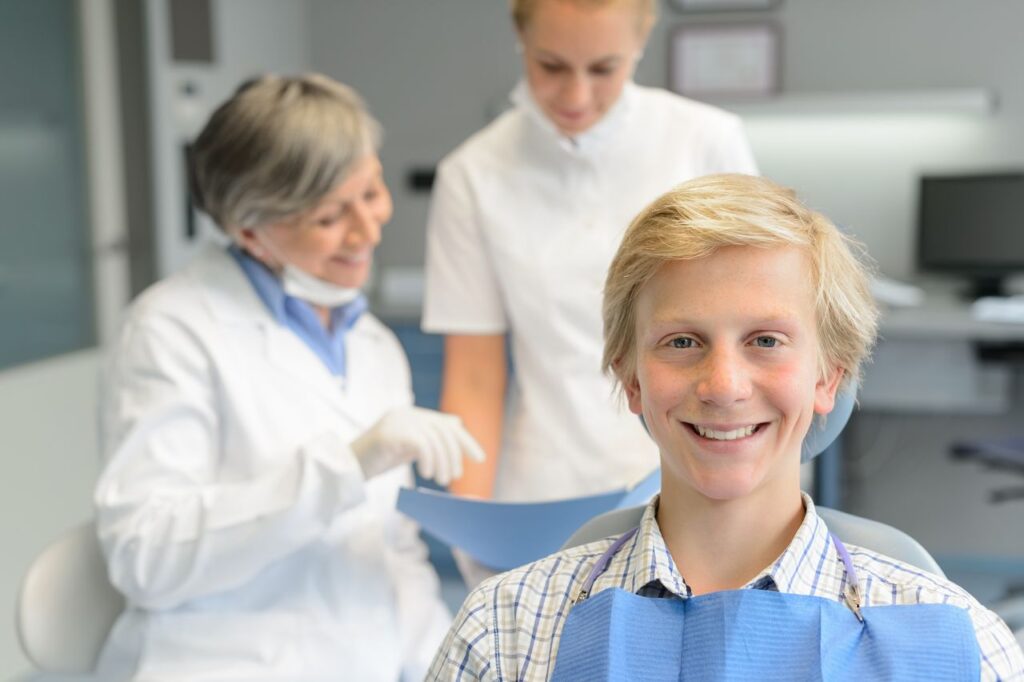
Your presence is a powerful comfort, but teens also appreciate a degree of independence. At Bryan G. Foote, D.D.S., we welcome parents to be part of the appointment based on your teen’s comfort level.
During the visit, we encourage teens to
- Stay calm because relaxed body language is contagious.
- Communicate before we begin and share any specific worries with our team. According to the study by NIH, open communication is key to effective dental fear solutions, and
- Bring headphones with calming music to provide security and block out dental noises.
Our office is designed to be a welcoming space, and Dr. Foote employs the “tell-show-do” method.
He explains and demonstrates tools in a friendly way before using them, which builds trust and reduces surprise, a technique that works just as well for 12 year olds as it does 16-year-olds.
5: Reinforce Trust and Celebrate Success
A study shows that building a trusting relationship is the ultimate solution for a lasting fear of the dentist. We focus on creating positive associations at every step. We praise cooperation and bravery, not just the outcome.
After the appointment, acknowledge your teen’s courage with positive reinforcement. A simple “That was really mature of you to handle that so well” can go a long way. This links the dental visit with a feeling of accomplishment. Our goal at Bryan G. Foote, D.D.S., is for every teen to leave feeling proud and confident for their next visit.
6: Partner with a Compassionate Professional
Sometimes, despite best efforts, a teen’s anxiety is significant. In such cases, the most important dental fear solution is to partner with a patient and an experienced dental team. Dr. Bryan G. Foote offers gentle, tailored care.
We never force treatment.
For teens with heightened anxiety, we may recommend a gradual approach, breaking care into smaller, manageable visits.
Our practice is a judgment-free zone where your teen’s emotional well-being is our top priority alongside their dental health.

Your Partner for a Confident Smile
Overcoming a fear of the dentist in teens can be a process, but you don’t have to navigate it alone. By using positive language, providing calm support, and choosing a compassionate dentist, you can transform dental care into a neutral or even positive experience for your teen.
If you are seeking understanding and expert solutions for dental fear in a warm, patient-centered environment, contact Bryan G. Foote, D.D.S., today. Let us help you build a foundation of trust and health for your teen’s smile that will last a lifetime.
Bryan G. Foote, D.D.S. – Gentle Care for Confident Smiles.
FAQs
1. What are the first signs my teen has a fear of the dentist?
Common signs include anxiety leading up to an appointment, heightened emotions, or expressing worries about pain. Recognizing these early signs is the first step in addressing dental fear with compassion and strategy.
2. How can I prepare my teen for their first dental visit to prevent fear?
Start by having positive conversations about dental health. Choosing a pediatric dentist who specializes in anxious teens and scheduling a casual “meet-and-greet” tour of the office can also build comfort and familiarity.
3. What should I do during the dental visit if my teen gets scared?
Stay calm and reassuring. Your composure is your teen’s anchor. Let the dental professionals guide the appointment, as they are trained in teen behavior. Avoid phrases like “don’t be scared” or “it won’t hurt,” which can inadvertently highlight the fear. Instead, offer quiet support and focus on positive reinforcement.
5. Are there specific techniques dentists use to help fearful teens?
For teens with significant anxiety, options like nitrous oxide (“laughing gas”) or creating a step-by-step treatment plan can build trust over multiple, gradual visits.
6. How can I talk about the dentist at home without causing anxiety?
Use positive, simple language. Avoid sharing your own negative experiences or using dental visits as a threat. Instead, focus on the positive outcomes, like a healthy, bright smile.