You brush twice a day. You floss. You see your dentist regularly. But there’s one more step that quietly protects your teeth more than almost anything else: fluoride. This natural mineral has been called “nature’s cavity fighter” for good reason. When used correctly, fluoride for oral care transforms how your teeth resist decay, repair early damage, and stay strong for a lifetime.
Many patients ask, “Do I really need fluoride?” Isn’t it already in my toothpaste? The answer is yes—but understanding the full benefits of fluoride helps you use it more effectively. Let’s dive into the science, the practical steps, and why Dr. Foote recommends fluoride for nearly every patient.

There’s a few key questions about Fluoride discussed below, including:
The Benefits of Fluoride in Your Oral Care Routine
What Is Fluoride and How Does It Work?
Three Core Benefits of Fluoride
Fluoride for Oral Care: Top 5 Proven Benefits
- Stops Cavities Before They Start
- Reverses Early White-Spot Lesions
- Reduces Tooth Sensitivity
- Protects Adults and Seniors Equally
- Safe and Cost-Effective
Professional vs. At-Home Fluoride: What’s the Difference?
Myth 2: “Fluoride doesn’t work for adults.”
Myth 3: “My well water has no fluoride, so I’m fine.”
How to Add Fluoride to Your Daily Routine
Is Fluoride Right For Your Family?
What Is Fluoride and How Does It Work?
Fluoride is a naturally occurring mineral found in soil, water, and certain foods. Its effect on teeth is unique: it actively rebuilds tooth enamel through a process called remineralization.
The National Institutes of Health (NIH) explains that fluoride attracts calcium and phosphate ions in your saliva, forming a new, stronger crystal surface on your teeth called fluorapatite. This surface is much more resistant to acid attacks from bacteria, sugar, and plaque.
Without fluoride, your teeth rely only on natural saliva to repair microscopic decay. With fluoride, that repair process becomes faster and more effective.
Three Core Benefits of Fluoride
| Benefit | What It Means for You |
| Prevents cavities | Reduces tooth decay by 20–40% in children and adults |
| Repairs early decay | Reverses white-spot lesions before they become holes |
| Reduces sensitivity | Strengthened enamel blocks external triggers (cold, heat, sugar) |
The Centers for Disease Control and Prevention (CDC) names community water fluoridation one of the ten outstanding public health achievements of the 20th century.
Fluoride for Oral Care: Top 5 Proven Benefits
1. Stops Cavities Before They Start
Cavities begin when bacteria in your mouth feed on sugar and produce acid. That acid dissolves calcium and phosphate from your enamel, a process called demineralization. Fluoride for oral care interrupts this cycle. It gets incorporated into enamel, making it harder for acid to penetrate.
A comprehensive Cochrane review, considered the highest standard in medical evidence, revealed that water fluoridation decreases tooth decay by approximately 25% in both adults and children. Read the Cochrane summary here.
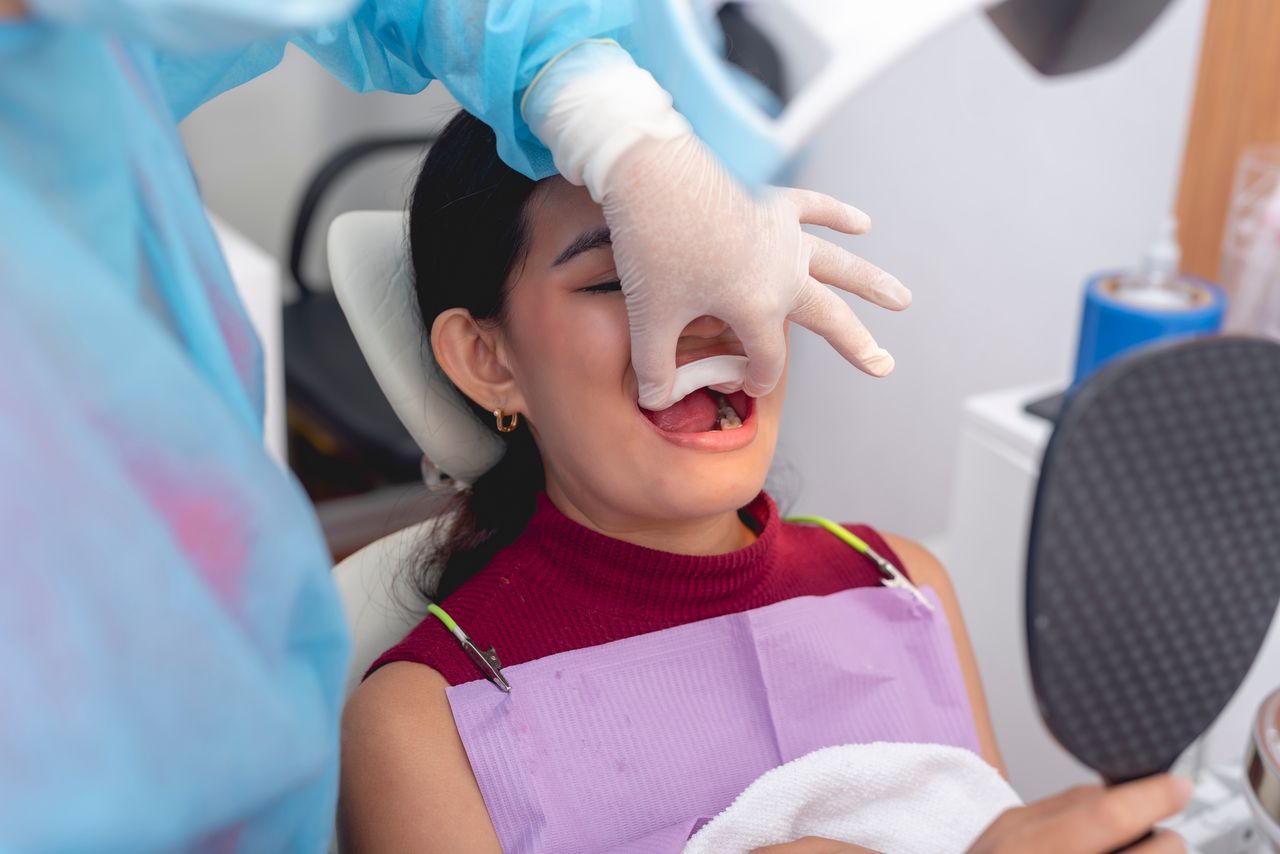
For patients in Columbia, MO, Dr. Foote can apply professional fluoride varnish, a concentrated treatment that takes two minutes and protects for months.
2. Reverses Early White-Spot Lesions
Have you ever noticed faint white patches on your child’s teeth or near your gumline? Those are early decay spots. At this stage, the damage is not yet a cavity. Fluoride can actually reverse it.
The mineral rebuilds the porous enamel from the inside out. With consistent fluoride exposure (toothpaste, rinse, or in-office treatment), those white spots can disappear completely, no drilling needed.
Dr. Foote offers preventive services, including fluoride varnish, during regular dental checkups. Catching decay early saves teeth and money.
3. Reduces Tooth Sensitivity
If you wince when drinking iced tea or biting into ice cream, your enamel may be thinning. Exposed dentin (the layer under enamel) has tiny tubes that lead directly to the tooth’s nerve. Fluoride blocks those tubes by creating a mineral barrier.
Over-the-counter fluoride toothpastes can help, but prescription-strength fluoride from a dentist works faster and lasts longer.
The Mayo Clinic lists fluoride gel or varnish as a first-line treatment for dentin hypersensitivity.
4. Protects Adults and Seniors Equally
Many people think fluoride is only for kids. That is false. Adults face unique risks:
- Receding gums expose root surfaces (which have no enamel).
- Dry mouth from medications reduces natural saliva protection.
- Crowns, bridges, and braces create trapped plaque zones.
For these patients, fluoride for oral care is essential. Prescription fluoride toothpaste or custom trays (used at home) dramatically lower decay rates in high-risk adults.
The American Dental Association (ADA) recommends fluoride for all ages, especially seniors taking multiple medications.
5. Safe and Cost-Effective
Fluoride is one of the most studied public health interventions in history. At the low concentrations used in water, toothpaste, and varnish, it is safe for children, pregnant women, and adults. The only common side effect is mild fluorosis (white specks on teeth) from excessive intake during early childhood, easily avoided by supervising toothpaste use.
Financially, fluoride saves money. Every $1 spent on community water fluoridation saves approximately $20 in dental treatment costs.
The World Health Organization (WHO) affirms fluoride’s safety and efficacy for global oral health.
Professional vs. At-Home Fluoride: What’s the Difference?
| Type | Strength | How Often | Best For |
| Over-the-counter toothpaste | 1,000–1,500 ppm | Twice daily | Everyone |
| Prescription toothpaste | 5,000 ppm | Once daily (night) | High-risk patients |
| Fluoride mouth rinse | 200–500 ppm | Daily | Children over 6, adults with braces |
| In-office varnish or gel | 22,600 ppm | Every 3–12 months | All ages, especially active decay |
Not sure which type you need? Schedule a consultation with Dr. Foote to assess your risk of cavities.
Get The Facts About Fluoride
Myth 1: “Fluoride is toxic.”
Fact: Toxicity depends on dose. You would need to swallow an entire tube of toothpaste (or drink hundreds of liters of fluoridated water at once) to reach harmful levels. At recommended doses, fluoride is safer than many over-the-counter vitamins.
Myth 2: “Fluoride doesn’t work for adults.”
Fact: Adult root decay is a growing problem. The Journal of Dental Research has published multiple studies showing fluoride varnish reduces root caries by over 40% in seniors.
Myth 3: “My well water has no fluoride, so I’m fine.”
Fact: Well water naturally contains very little or no fluoride. If you are on well water, you miss out on the protective benefits of community fluoridation. Ask Dr. Foote about prescription fluoride supplements or varnish.
The CDC provides a map of water fluoridation status by state. Most of Missouri has fluoridated community water, but private wells do not.
How to Add Fluoride to Your Daily Routine
- Use a fluoride toothpaste. Look for the ADA Seal of Acceptance. Brush for two minutes, spit, and do not rinse. Rinsing washes away the concentrated fluoride.
- Drink tap water. If your community water is fluoridated, tap water is better than bottled water (most bottled water lacks fluoride).
- Ask about prescription fluoride. If you have dry mouth, gum recession, or a history of many cavities, ask Dr. Foote for a prescription-strength toothpaste or custom trays.
- Get in-office varnish. Done during a regular cleaning. It takes two minutes, tastes pleasant, and protects for months.
See all preventive services offered by Dr. Foote. Including fluoride treatments for children and adults.

Is Fluoride Right For Your Family?
For most families, yes. The benefits of fluoride far outweigh any risks when used correctly. Children benefit from stronger, developing teeth. Adults benefit from reduced decay around fillings and crowns. Seniors benefit from protection against root cavities.
If you have concerns, such as a child who swallows toothpaste or a medical condition that affects fluoride metabolism, Dr. Foote will provide personalized guidance. There is no one-size-fits-all, but for the vast majority, fluoride is a simple, science-backed way to keep teeth healthy for life.
Fluoride is not a replacement for brushing, flossing, or dental visits. But it is one of the most powerful tools in your oral care routine. From reversing early decay to cutting cavity risk nearly in half, fluoride for oral care delivers measurable results.
Ready to boost your cavity protection? Contact Dr. Foote’s office today to schedule a fluoride varnish treatment or to ask about prescription fluoride options.
📍 Location: 601 W. Nifong Blvd, Suite 4A, Columbia, MO 65203
📞 Phone: (573) 123-4567 (replace with actual number)
Request an appointment for fluoride treatment
FAQ
1. Is fluoride safe for young children?
Yes, but in appropriate amounts. For children under 3, use a smear of fluoride toothpaste (the size of a grain of rice). For ages 3–6, a pea-sized amount. Supervise brushing to minimize swallowing. The American Dental Association confirms fluoride is safe and effective for preventing cavities in children.
2. Do I need fluoride if I use fluoride toothpaste?
Often yes. Toothpaste provides daily maintenance, but professional fluoride varnish or prescription-strength products offer much higher concentrations. For patients with dry mouth, gum recession, or a history of frequent cavities, additional fluoride beyond toothpaste is strongly recommended.
3. Can fluoride reverse a cavity that already has a hole?
No. Once a cavity has formed a visible hole through the enamel, fluoride cannot reverse it. That requires a filling. However, fluoride can reverse early decay (white-spot lesions) before a hole develops. That is why catching decay early during regular dental visits is critical.
4. Does bottled water contain fluoride?
Most bottled waters do not contain significant fluoride. Popular brands like Dasani and Aquafina remove fluoride during purification. Some brands add fluoride back, but levels vary. For consistent fluoride benefits, drink tap water if your community water is fluoridated. Check the CDC’s water fluoridation map for your area.
5. How often should I get professional fluoride varnish?
For most children and adults at average cavity risk, dental check-ups should occur every 6–12 months, typically during regular cleanings. For high-risk patients (active decay, dry mouth, braces, gum recession), every 3–6 months. Dr. Foote will assess your risk and recommend the right schedule for you.