
Pregnancy is a remarkable journey that brings significant changes to a woman’s body, and among these, oral health often receives less attention than it deserves.
This comprehensive guide will illuminate the critical importance of maintaining excellent dental health during pregnancy, emphasizing how it safeguards not only the mother’s well-being but also that of her developing baby.
Bryan G. Foote, DDS, understands these unique needs and is committed to providing exceptional dental care during this special time, aligning with the guidelines of the American Dental Association.
Understanding the Importance of Dental Health During Pregnancy
Dental care is profoundly important during pregnancy. Pregnant women are particularly susceptible to a wide range of oral health conditions that could potentially harm both their own health and the future of their baby.
Poor oral health during pregnancy can unfortunately lead to adverse health outcomes for both mother and child. Maintaining good oral hygiene throughout pregnancy can significantly contribute to a healthy pregnancy and the birth of a healthy baby.
Regular dental checkups are essential for monitoring oral health problems, especially during pregnancy.
The Connection Between Oral Health and Pregnancy
Poor oral health during pregnancy can lead to a cascade of problems, including premature delivery, low birth weight, preeclampsia, gingival tissue ulcerations, and pregnancy granuloma.
Other concerns include gingivitis, pregnancy tumors (epulis gravidarum), loose teeth, mouth dryness, and dental erosions. The fluctuating hormone levels inherent in pregnancy directly exacerbate gum problems and can indirectly contribute to tooth decay. Mothers experiencing attachment loss, a sign of advanced gum disease, face a higher risk of giving birth to low-birth-weight babies.
Babies born prematurely are at an increased risk of brain injury and potential problems with their eyesight and hearing.
Common Dental Health Issues Faced by Pregnant Women
Pregnant women are susceptible to a wide array of oral health conditions, including tooth decay and gingival problems. The significant hormonal changes during pregnancy directly impact gum health.
Conditions like gingivitis or epulis gravidarum are frequently observed, with gingivitis affecting approximately 40% of pregnancies. Furthermore, nausea and vomiting, which affect about 70% of pregnancies, can negatively impact oral hygiene or cause erosion of the maternal enamel layer.
Dr. Foote emphasizes proactive management of these issues to ensure continuous good oral health.
Maintaining Good Oral Health During Pregnancy

Essential Dental Care Tips for Expecting Mothers
To sustain optimal oral health during pregnancy, daily oral care should be continued without interruption.
Effective dental care should include brushing your teeth with fluoride toothpaste and using dental floss at least twice a day. Additionally, gargling with mouthwashes or warm salty water can be beneficial, as warm salty water helps relax gums and reduces gum sensitivity.
Regular dental visits to Bryan G. Foote, DDS, will further ensure your teeth and gums remain as healthy as possible during pregnancy. After instances of vomiting, rinsing your mouth thoroughly with plain tap water is crucial, followed by a mouthwash containing fluoride or smearing toothpaste with fluoride over your teeth to protect enamel.
Safe Dental Procedures During Pregnancy
At Bryan G. Foote, DDS, we understand the concerns surrounding dental treatment during pregnancy. The American College of Obstetricians and Gynecologists and the American Dental Association both state that preventive, diagnostic, and restorative dental treatment are safe during pregnancy.
The second trimester is generally considered the most appropriate period for many necessary dental procedures. These include treatments such as tooth extraction, filling, and root canal treatment.
In emergency cases such as severe toothache or gingival inflammation, existing infections can affect the baby’s health much more adversely than the potential effects of dental treatment, making timely intervention crucial.
To reduce radiation exposure during dental x-rays, Dr. Foote utilizes lead gowns, fast films, well-calibrated instruments, and collimators. Local anesthetics such as lidocaine and prilocaine can be safely used during pregnancy.
How to Combat Dental Problems While Pregnant
If you experience recurrent vomiting, it is important to speak to your doctor about other strategies to manage your symptoms. For those experiencing gagging while brushing, try using a toothbrush with a small, soft head, take your time, and concentrate on breathing deeply.
If the taste of your usual toothpaste makes you gag, consider switching brands or simply brush with water, then use a fluoride mouthwash. Toothpastes without SLS may also help reduce the gag reflex.
When cravings for sugary snacks strike, try to avoid them and opt for healthier alternatives like fresh fruit, hard cheeses, nuts, eggs, or vegetable sticks. Always rinse your mouth with a fluoride mouthwash or brush your teeth after consuming sugary snacks.
Health Problems Linked to Poor Dental Health in Pregnancy
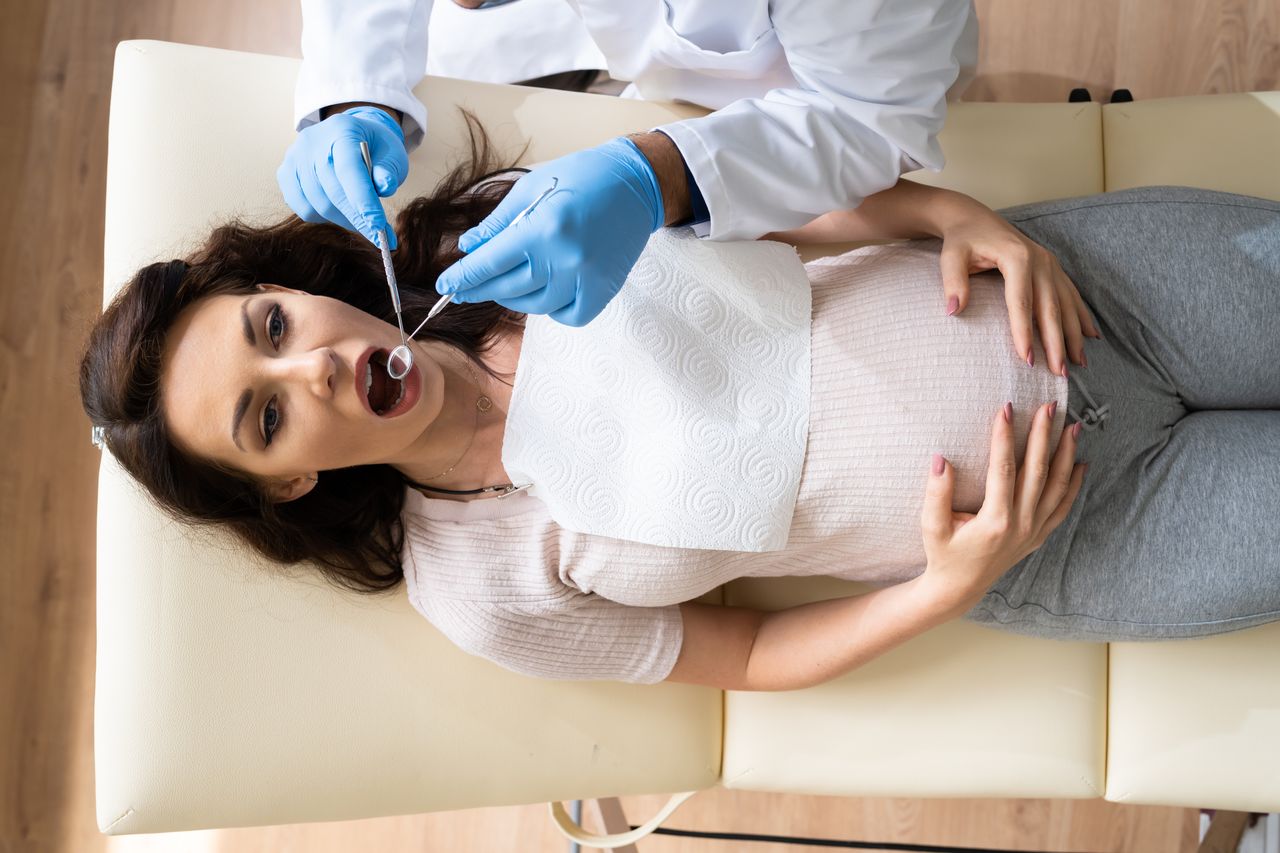
Impact of Oral Health on General Health During Pregnancy
Poor oral health during pregnancy can lead to adverse health outcomes for both the mother and the baby. If gingivitis is left untreated, it can progress to periodontitis, leading to the loss of bone that supports the teeth and severe gum infections. Periodontitis has also been associated with serious poor pregnancy outcomes, including preterm birth and low birth weight.
Furthermore, children of mothers with high levels of untreated cavities or tooth loss are significantly more likely to develop cavities themselves.
Dr. Foote emphasizes that maintaining good oral health is paramount for both maternal and fetal health.
Risks of Neglecting Dental Care During Pregnancy
Neglecting dental care during pregnancy exposes expectant mothers to numerous risks. Poor oral health can contribute to premature delivery, low birth weight, pre-eclampsia, gingival tissue ulcerations, and pregnancy granuloma.
Mothers who experience attachment loss face a higher risk of giving birth to low-birth-weight babies.
Unnecessary interventions during the first trimester can unfortunately lead to adverse outcomes, reinforcing the importance of carefully planned dental treatment.
Dr. Foote strongly advocates for proactive dental health care throughout pregnancy to mitigate these risks.
Preventing Dental Health Problems for a Healthy Pregnancy
If expecting mothers take some simple precautions, they can effectively prevent tooth loss and other dental problems during pregnancy. Adequate intake of energy and nutrients constitutes positive health effects.
During pregnancy, mothers should meet their calcium requirements by incorporating calcium-rich foods such as milk and dairy products, alongside green, leafy vegetables, into their diet.
With a good diet and adequate oral health care, pregnant women can expect to experience no different tooth problems during pregnancy than at any other time.
Expert Insights on Oral Health Care During Pregnancy
Consulting Your Dentist: What to Expect
It is safe and highly recommended to see your dentist at any stage of your pregnancy. Our team takes extra precautions to ensure that all dental care is safe for both you and your baby. Untreated decay and gum disease can lead to infections, posing a risk to both maternal and fetal health.
Common concerns regarding dental treatment during pregnancy, such as the use of local anesthetics or numbing agents and dental x-rays, are safe during pregnancy. Bryan G. Foote, DDS uses advanced techniques and lead gowns for dental x-rays to minimize radiation exposure, making them entirely safe.
How Bryan G. Foote, DDS, Can Support Your Dental Health Journey
Bryan G. Foote, DDS is committed to supporting every aspect of your dental health journey, especially during pregnancy. We understand the unique oral health challenges and hormonal changes during pregnancy that can impact your teeth and gums.
Our expert team provides comprehensive care, offering advice and dental treatment specifically tailored to pregnant women. We prioritize safe dental procedures, utilizing advanced techniques for dental x-rays and approved local anesthetics.
From routine dental check-ups to addressing specific dental problems, our dedicated professionals are here to guide you. By focusing on preventative care and educating you on good oral health habits, we aim to ensure a healthy smile for both you and your baby. Schedule your appointment today and experience the difference that personalized, expert care can make.
FAQs
1. Is it safe to go to the dentist while pregnant?
Indeed, it is entirely safe. Professional cleanings, regular examinations, and vital procedures such as root canal therapy or fillings are considered secure. Bryan G. Foote, DDS prioritizes safety by employing collimators and lead gowns during X-rays, alongside FDA-approved local anesthetics like lidocaine. The second trimester is generally considered the most appropriate period for non-emergency dental interventions.
2. Why are my gums bleeding now that I’m pregnant?
This common occurrence is driven by significant hormonal changes that increase progesterone and estrogen, heightening gingival sensitivity to plaque. This often manifests as gingivitis, which affects approximately 40% of pregnancies. Left unaddressed, it may escalate to periodontitis, which is linked to low birth weight and premature delivery.
3. Can dental problems during pregnancy harm my baby?
Yes, poor oral health during pregnancy can lead to adverse health outcomes for your baby. Research indicates that advanced gum disease is a risk factor for pre-eclampsia and preterm birth. Moreover, mothers with untreated dental caries can transmit harmful bacteria to their infants post-delivery.
4. What should I do if morning sickness is hurting my teeth?
It is essential to rinse your mouth with plain water immediately following instances of vomiting to neutralize gastric acids. Rather than brushing right away, which might further damage softened enamel, rinse thoroughly and utilize a fluoride mouthwash or a smear of fluoride toothpaste. Wait thirty minutes before your regular brushing routine.
5. What dental treatments should be avoided during the first trimester?
While routine dental visits for cleanings are encouraged, non-urgent or elective treatments are typically deferred to the second trimester. In emergency cases, resolving an infection is prioritized for the baby’s safety. Always consult with your dental team and prenatal care provider before proceeding with treatment plans.